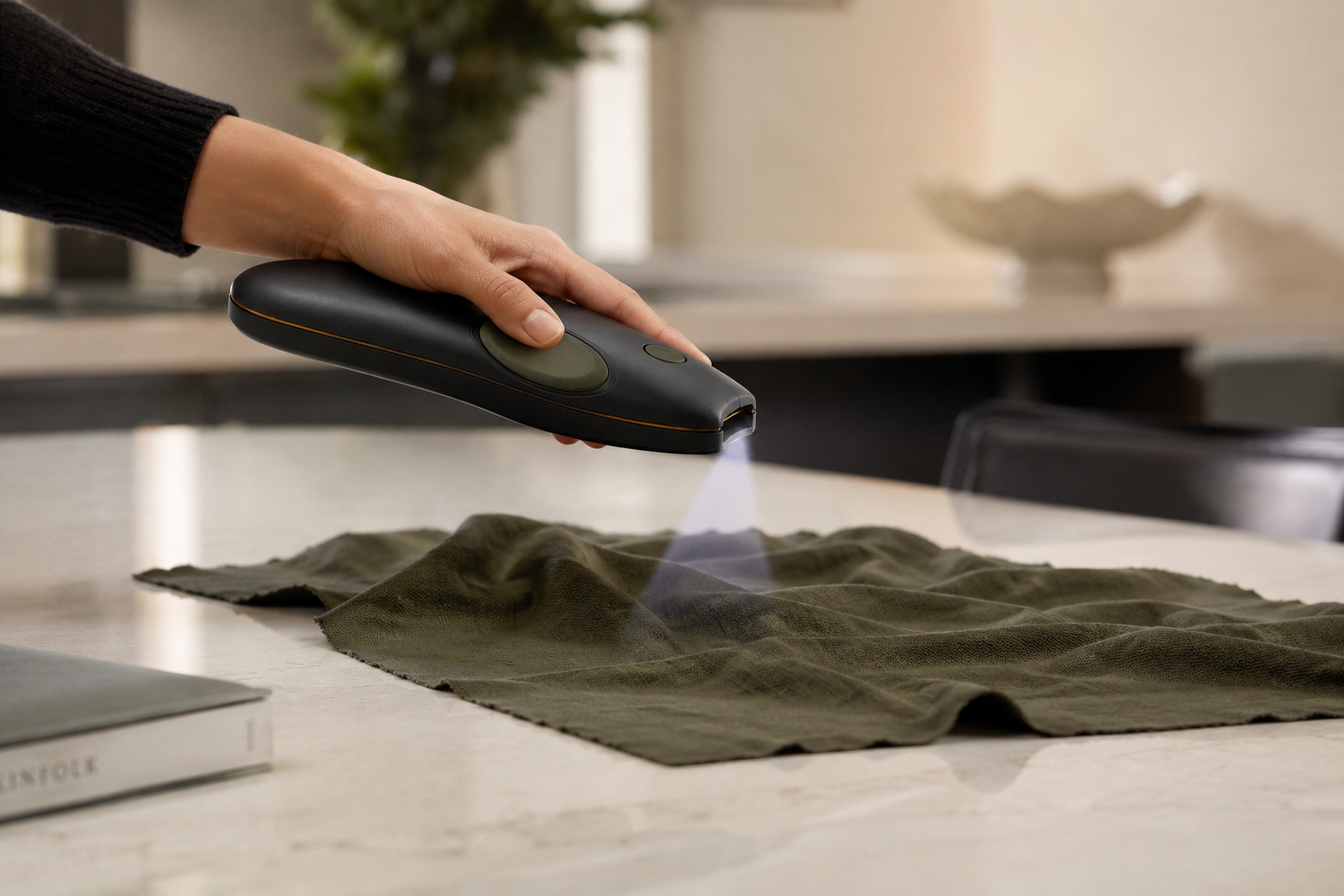
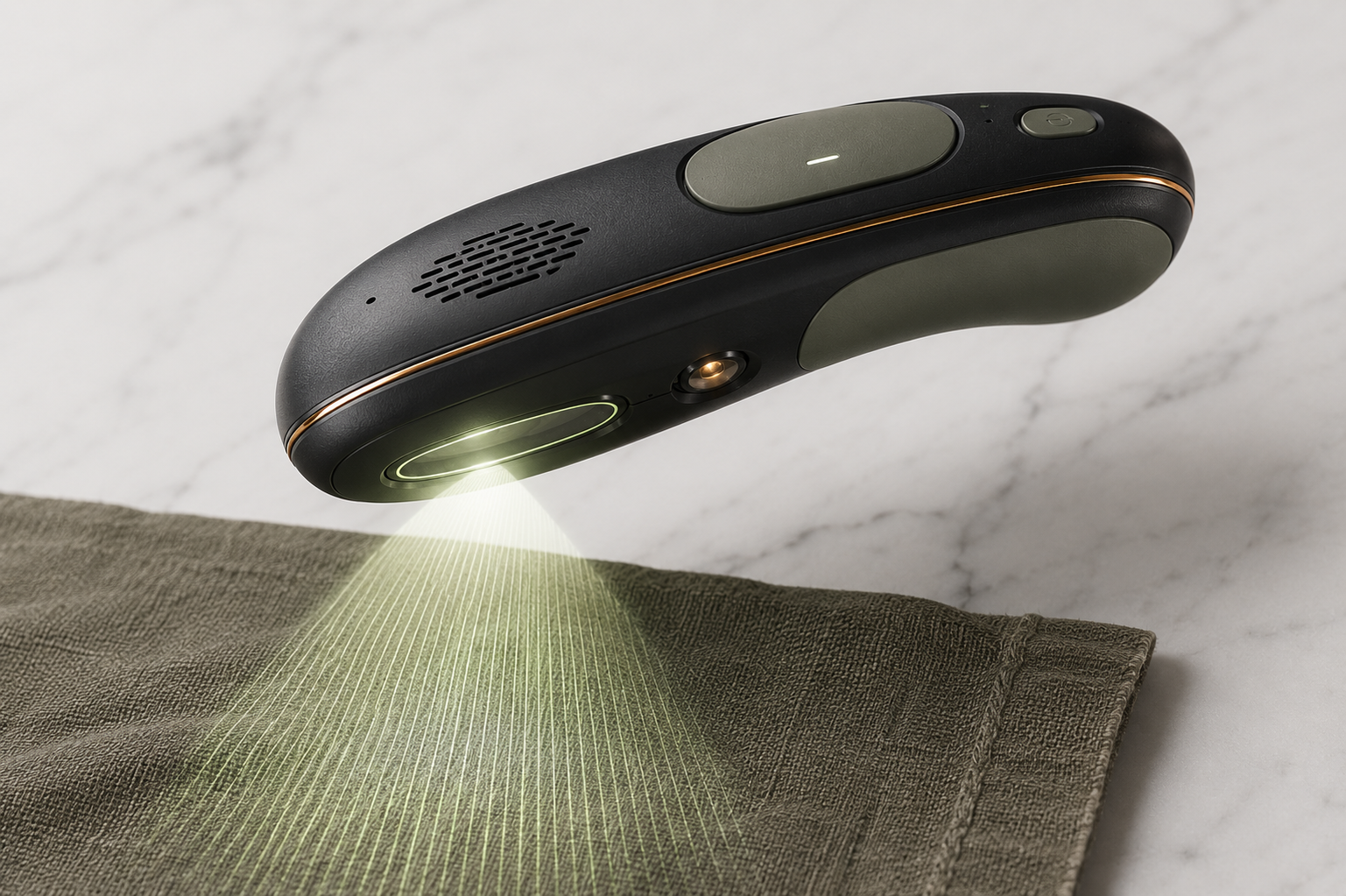
ColorSense Prism casting a directional spectral scan onto fabric
Technology

Not a camera.
Not a guess.
Actual light science.

ColorSense reads the spectral signature of fabric across 14 channels of light — the same physics used in lab-grade colorimetry, shrunk to fit in your hand.

One rung of a bigger idea

The next leap in computing isn’t faster thinking. It’s better sensing.

Every decision a person makes starts with what they can perceive — and for over a billion people, the very first input, color, is missing or unreliable. ColorSense gives it back. The free app is the way in. The Prism is the truth. Every scan a human confirms makes the whole system smarter. Vision is where we start. It is not where we stop.

The thinking behind it →
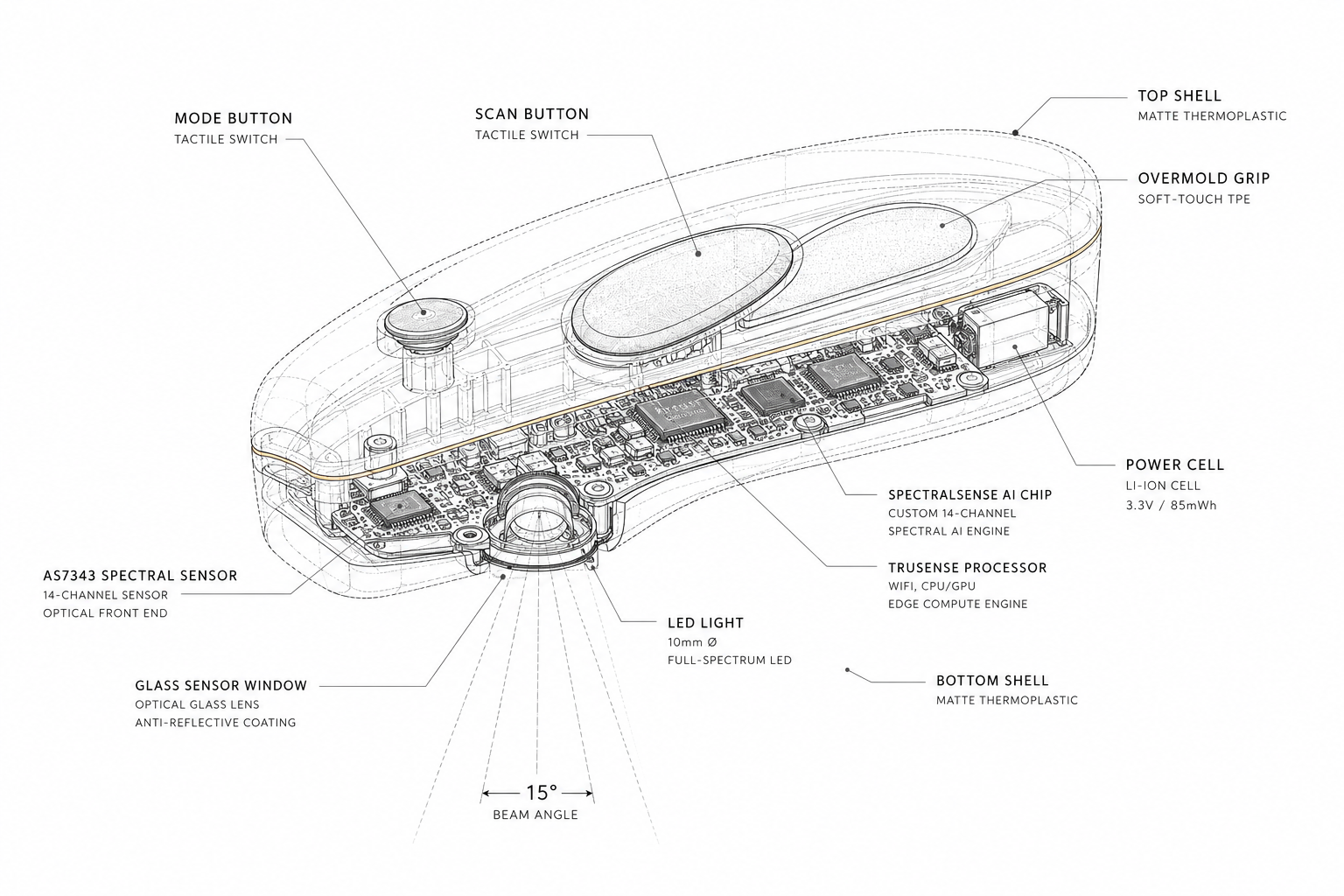
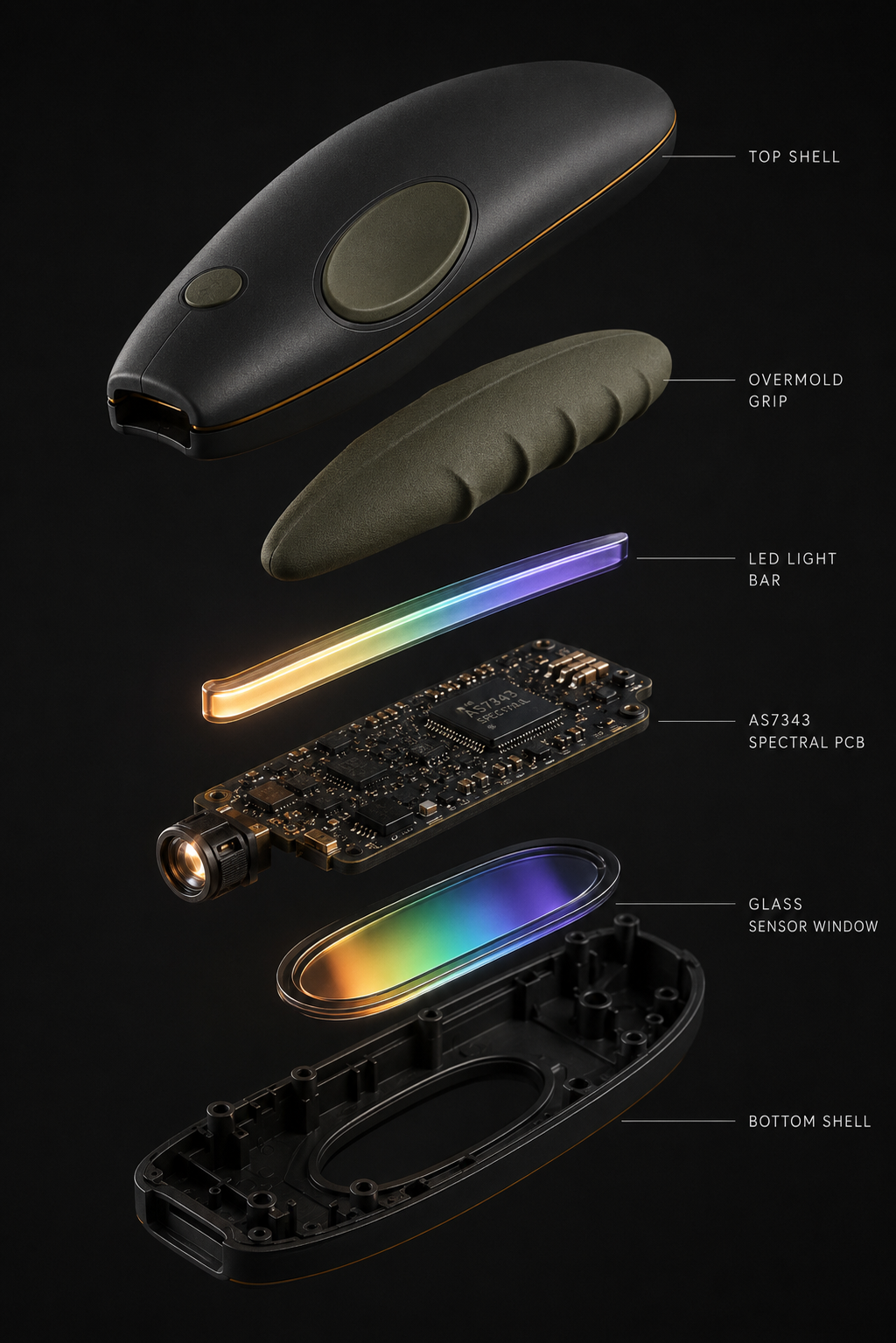
Exploded view of the ColorSense Prism
Inside ColorSense

Every layer earns
its place.

01
Top Shell & Buttons
Matte thermoplastic · Scan + Mode, both findable by touch
02
Overmold Grip
Soft-touch TPE · orients in the hand, won’t roll off a shelf
03
Full-Spectrum LED
Carries its own light · reads true color in total darkness
04
AS7343 Spectral Sensor
14-channel · 415–940nm · measures light the eye can’t
05
Edge Compute + Voice
On-device AI, speaker & mic — it speaks the answer, no phone
06
Battery & Weighted Base
All-day Li-ion · non-slip base · sits upright on any surface
Design story

What we considered.
What we cut. What we kept.

Six ideas we prototyped, debated, and decided on — honestly.

Cut

Clip-on phone attachment

We built three versions. Every one required the user to manage a phone — the exact dependency we were trying to eliminate. Gone.

Cut

Screen on the device

Useless for someone with low vision. Added cost, complexity, and a failure point. The voice is the interface.

Cut

Voice activation only

“Hey ColorSense” is great when it works. One physical button won for reliability in noisy rooms and mornings when you just need it to work.

Rethought

Puck / stone form factor

Beautiful on a nightstand. Terrible for fabric contact. The wand shape lets the sensor window press flat against a garment — essential for accurate reads.

Cut

Camera-based color ID

Cameras guess from reflected light under ambient conditions. Spectral sensors measure. Navy and black look the same in a photo. Not to our sensor.

Kept

Cloud AI enhancement

The device works offline. Always. Cloud AI adds richer fabric descriptions and outfit context when connected — but it’s enhancement, never a dependency.
The non-negotiables

Must-haves.
Not nice-to-haves.

Before we designed anything, we wrote these down. Every decision since has been measured against them.

01
Works in total darkness
The LED illuminates the fabric. No ambient light required. Get dressed at 4am without waking anyone.
02
Works offline
Color and fabric ID run on the device. Wi-Fi outage, travel, power fluctuation — ColorSense still works.
03
Zero setup to use
A caregiver or family member sets it up once. From that day forward, the user never touches a screen or app.
04
Locatable by touch
The tactile buttons and weighted base mean you can find it and orient it by feel alone. In the dark. Half asleep.
05
Navy ≠ black. Every time.
14-channel spectral analysis separates colors that cameras and human eyes routinely confuse. That’s the whole point.
06
A fraction of the alternatives
Assistive devices routinely run four figures. ColorSense Prism is $349 — in reach of a gift, a care-plan line item, or a personal splurge. Independence shouldn’t be a luxury good.
In use

Ten seconds.
Total confidence.

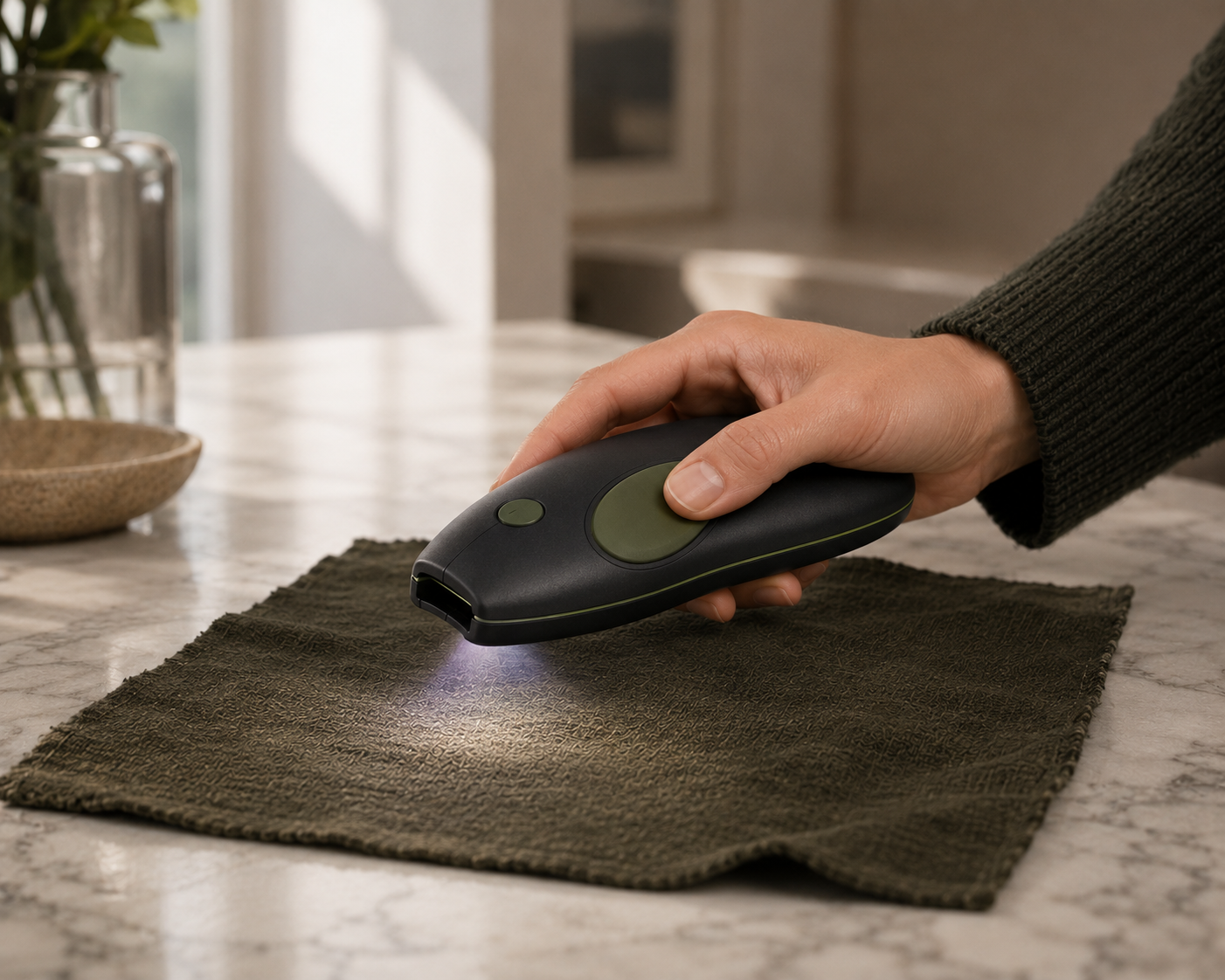
Scanning a garment with the Prism Reading fabric color in the home
Technical

Built like
it matters.

ColorSense Prism technical cutaway with component callouts
Reserve yours

ColorSense Prism.
$349.

Early reservations get first units, locked pricing, and a free 3-month Care Plan.

Reserve ColorSense — $349